Existing villa
- What is checked
- The visit, the condition of the building and the remaining term written in the contract.
- What is not acquired
- A yield or a capital gain.

Investing in Bali
By Mathieu MAILLOT — 8 min read
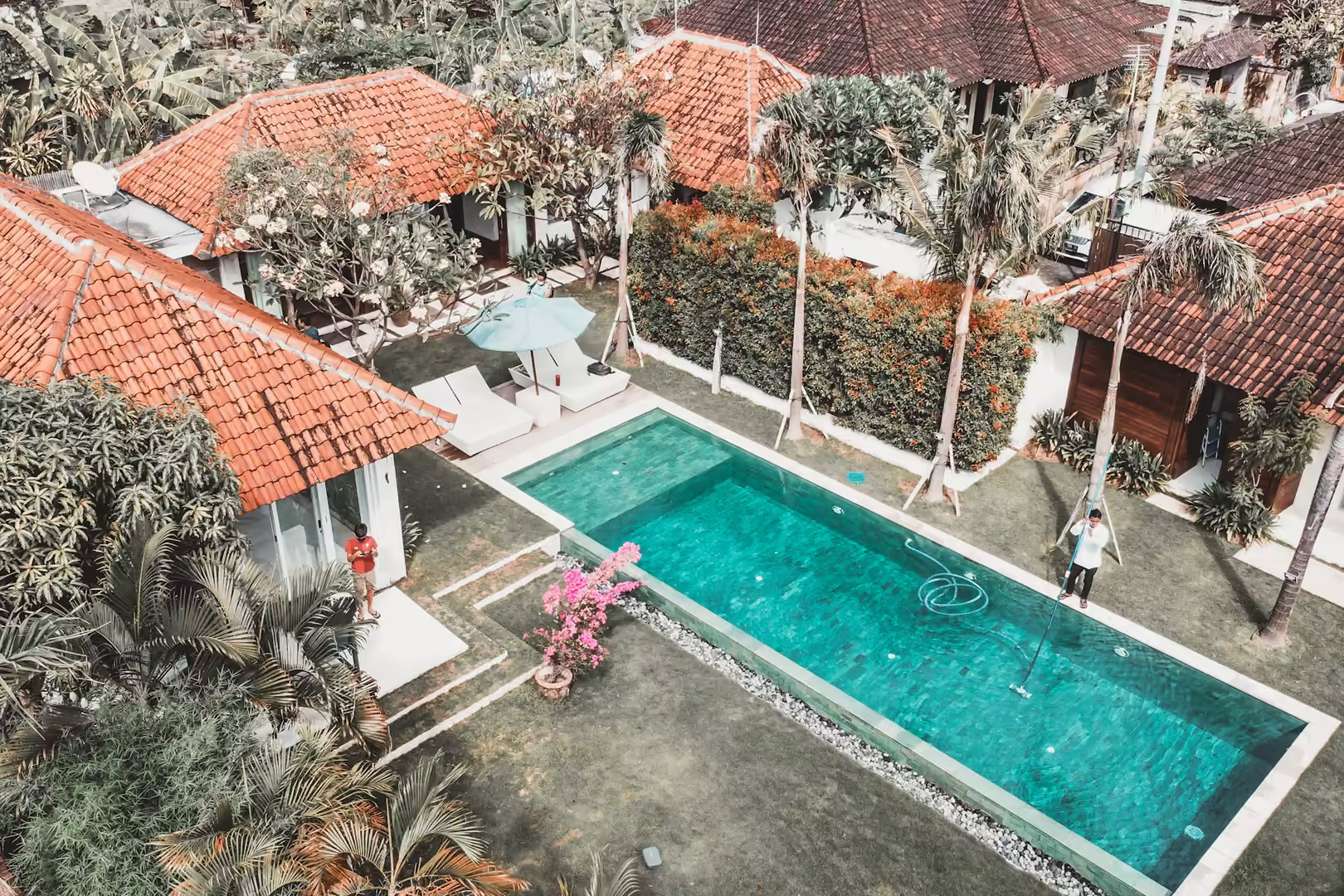
Every year, the island of Bali attracts thousands of investors drawn by the dynamism of the local property market. Buying a villa already built, a new villa or a property off-plan does not answer the same project. The choice depends on your objectives, your budget, the condition of the property and the terms of acquisition. Each formula has its constraints. None stands out as the best.
An existing villa, a new villa or an off-plan purchase in Bali: which criteria should you compare?
To choose well, several parameters need to be analysed: price, the potential for value growth, the return you are aiming for, the degree of customisation, how clearly you can see the property, and the associated risks. BPS statistics are published at the BPS Bali website. They describe the province’s economy and tourism. They do not give a villa price or a villa yield.
The mode of acquisition — leasehold in Bali (a long lease) or full ownership — together with the legality of the land and, in an off-plan project, the developer’s experience, are also decisive. Local tax should not be overlooked: it can significantly affect the return on investment.
Price, potential return and future value: what are the marked differences?
An existing villa can be visited: age, any works, and the remaining term of the contract. A new villa is judged on the finishes, the maintenance ahead and the documents handed over. A warranty, if it appears in the contract, is read in those documents and under the applicable law. It is not the automatic equivalent of the French ten-year structural warranty.
An off-plan purchase and an existing villa are not read in the same way. The first is judged on the developer, the title, the timetable and the penalties written in the contract. The second is visited. Neither carries a capital gain, a rent history or a yield.
Timing, customisation and visibility of the property: what should you expect?
An existing villa appeals through its practicality: an immediate visit, a quick purchase, and direct rental use. The condition of the building can be checked, as can its rental history and its running costs. That transparency is reassuring, especially on a first investment in Bali.
Off-plan in Bali, customisation is at its greatest, from design through to finishes. But watch variable timescales, sometimes lengthened by developer delays. A completed new villa combines immediate visibility of quality, limited flexibility for customisation, and the ability to let without waiting for works to finish.
Buying a new villa in Bali under an off-plan contract calls for greater vigilance. The seriousness of the developer in Bali is crucial, because it determines whether the project succeeds, whether Indonesian standards are met, and whether zoning and building permits (IMB or PBG) are complied with.
It is essential to check the guarantees offered, the contractual timetable and the legal solidity of the lease (leasehold in Bali). Close follow-up avoids unpleasant surprises and delays that damage the return.
A developer should present a clear land title (HGB, hak pakai or the owner’s title), together with a hak sewa contract whose clauses are readable. The contract frames the payment timetable, provides for delay penalties and the terms of reimbursement if the property is not delivered. A builder’s warranty may appear in it. This is not the automatic equivalent of the French ten-year structural warranty, and it is not a legal obligation to be cited here.
In practice, some developers retain part of the balance until compliant handover. Instructing a specialist local lawyer or a French-speaking notary remains strongly advisable in order to secure the transaction and validate every administrative aspect.
Not every district in Bali allows a secure leasehold for foreigners, which can limit villa letting in Bali or a resale. Checking the zoning at the start of the project is essential if the investment is to last.
The land title must be free of disputes or mortgages. The official contract, for its part, must state all of the developer’s obligations, from the detailed programme through to the materials used, including the administrative steps required to obtain the certificates for rental operation.
Acquiring an existing villa allows you to visit the property. The remaining term is checked in the contract and the applicable documents. There is no usual term to retain. A short term does not, on its own, set the resale value or a yield.
Inspecting the building carefully, analysing fixed costs and anticipating renovation needs are essential steps if the project is to stay financially sound.
An older property may need energy or structural works, or simply an aesthetic upgrade. Using a local specialist helps you avoid hidden defects that could threaten the rental return in Bali.
The advantage of an existing property also lies in the ability to check the villa’s letting history in Bali, the occupancy rate and the effectiveness of the villa-management system already in place.
Even for a new villa in Bali, a thorough review of taxes, service charges and commercial status (guesthouse or private residence) is essential. Some villas generate income subject to specific rules.
The longer the remaining term of the leasehold in Bali, the greater the potential for value growth. Professional management and a premium location make it possible to contemplate an attractive resale.
To make the decision easier, here is a summary table setting the strengths and weaknesses of each investment model side by side — off-plan in Bali, a new villa in Bali already delivered, and an existing villa.
Existing villa
New villa delivered
Off-plan purchase
| Formula | What is checked | What is not acquired |
|---|---|---|
| Existing villa | The visit, the condition of the building and the remaining term written in the contract. | A yield or a capital gain. |
| New villa delivered | The visit, the permits and the term written in the contract. | An automatic ten-year structural warranty. |
| Off-plan purchase | The developer, the title, the payment schedule and the penalties provided in the contract. | Handover on the announced date, rent before the keys are handed over, a capital gain. |
The property sector in Bali raises many questions among French-speaking investors. Here are some essential answers on leasehold in Bali, rental management and the specifics of off-plan in Bali.
This overview is intended to clarify your steps, secure your investments and improve your decision-making in the Balinese market.
In Bali, full ownership is reserved for Indonesian citizens. In practice, foreign investors turn to a hak sewa. Its term and its renewal are read in the contract. Checking the renewal clause is essential: it is not acquired as a matter of principle.
A notarial deed formalises the contract. It guarantees neither the stability of the holding, nor assignment of the lease, nor a renewal.
To improve the rental return in Bali, it is advisable to entrust villa management in Bali to a specialist local company. These providers handle maintenance, housekeeping, digital communication, guest welcome and tax filings, adapted to the property’s land status.
Comparing offers, included services and the reputation of French-speaking operators on the ground helps you avoid disappointments and ensures effective management of villa letting in Bali.
The main risk lies in the ability of the developer in Bali to meet its commitments: handover date, quality of the works, reliability of the land title and administrative compliance. Requiring references and visits to completed projects will help you judge how serious the developer is.
Surrounding yourself with an independent local lawyer is strongly recommended, so that each contractual step can be checked and the funds transferred can be secured in a regulated escrow account.

We advise international investors looking in Bali and Lombok: location, budget, how to hold the asset, and which projects to consider.